Roofing
Social Media for Roofers: Storm Season and Beyond
Stand apart from out-of-town storm chasers: show local licenses, real crews, magnet nail sweeps, four-season roof care, and calm inspection tips.
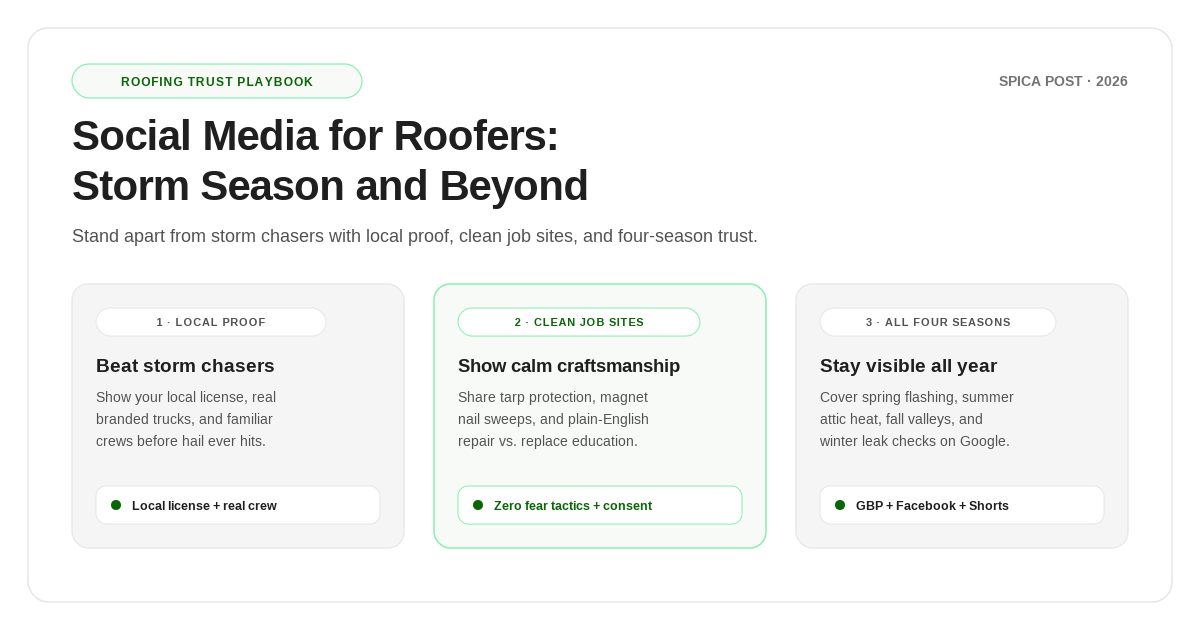
Social media for roofing companies has one job that separates respected local contractors from fly-by-night door knockers: proving you are licensed, rooted in town, careful with a homeowner’s property, and still around five years after the final nail goes down. When hail or straight-line wind rolls through a county, homeowners do not pick the loudest ad promising a “free roof”; they look up the roofer whose trucks, crew faces, clean driveway sweeps, and plain-English advice they already recognize.
Too many solid roofing companies stay invisible all spring, summer, and fall, then scramble to run urgent ads the morning after a storm hits. By that afternoon, out-of-town storm chasers are already saturating neighborhood feeds with fear-based pitches. Showing up calmly twice a week across all four seasons builds a public track record that an out-of-state sales outfit simply cannot copy overnight.
This guide lays out how established roofers build unmistakable local proof, which channels bring real residential and light-commercial calls in 2026, a four-season calendar from spring flashing checks to winter leak triage, strict homeowner consent and photo privacy habits, five copy-ready roofing captions, a five-minute job-site photo routine, and honest trade-offs if you evaluate Spica Post.
How local roofers beat storm chasers before the weather turns
After severe weather, consumer watchdogs like the Federal Trade Commission (FTC) and the National Roofing Contractors Association (NRCA) routinely warn homeowners against unlicensed traveling crews who knock on doors, demand large cash deposits, use out-of-state plates, and vanish before warranty leaks appear. Your social media profiles and Google Business Profile should answer every single trust check those guides tell homeowners to run.
Five local-trust signals to put in plain sight
- Visible license, insurance, and local city scope. Put your primary city or county, state contractor license number (where required by state law), and direct local phone number in your bio and on your Link Page. Never hide behind a vague nationwide tagline.
- Real crew members and branded trucks. A smiling two-person crew beside a clean, lettered truck with local plates in front of your own shop or local supply yard builds instant credibility. Homeowners want to recognize the person climbing onto their roof.
- Property-protection and cleanup proof. One of the biggest unspoken fears homeowners carry during a roof replacement is shredded flowerbeds and stray roofing nails in the driveway where kids or pets walk. Photographing plywood leaned over windows, tarps draped carefully over shrubs, and a rolling magnetic nail sweeper running across the lawn sells your company harder than any discount coupon.
- Honest repair versus full replacement education. Door-knockers tell every homeowner their roof is totaled. When your page explains clearly why a cracked neoprene pipe boot or lifted ridge cap only needs a straightforward targeted repair while widespread hail bruising or brittle 25-year shingles justify full replacement, homeowners trust your quote before you even set up a ladder.
- Multi-year continuity. Two calm posts a week for twelve months creates a timestamped archive proving you live and work in the community long after storm season closes.
Where homeowners actually look for a roofer in 2026
You do not need to dance on camera or manage eight social apps while running crews and material deliveries. Focus your energy on the channels where homeowners verify contractors, compare reviews, and look for practical roof answers.
| Channel | What the homeowner does here | Best weekly job for a roofing company | Current Spica Post status (Nov 2026) |
|---|---|---|---|
| Google Business Profile | Searches “roofer near me”, “roof leak repair [City]”, reads reviews and job photos | Weekly consented job photo, accurate service area, seasonal post, fast review replies | Built and enabled in production; awaiting first live profile verification |
| Facebook Page and local groups | Checks neighborhood referrals, asks “Who do you trust for roofs?”, reads crew updates | Two weekly posts: clean install proof + plain-English roof tip; polite community replies | Built; completing Meta App Review |
| YouTube Shorts and Instagram Reels | Watches 30-second answers on pipe boots, hail bruising, ridge vents, and nail sweeps | One calm vertical explainer clip every week or two with city named in caption | Built; Instagram completing Meta App Review; YouTube OAuth approved and completing compliance audit |
| Branded Link Page | Taps from bio or truck QR sticker to verify license, see service cities, and request inspection | Holds license/insurance line, inspection request form, Google review link, and emergency tarp number | Live today in Spica Post with announcement boxes and printable SVG QR codes |
| LinkedIn (personal profile) | Property managers, HOA boards, real estate agents, and commercial building owners | Twice-monthly posts on preventative commercial maintenance, real estate roof certs, and HOA timelines | Live direct publishing today |
| X / Bluesky / Mastodon | Local weather watchers, journalists, and neighbors checking real-time storm dispatch status | Calm post-storm wait-time updates, ground-level check checklists, and emergency tarp availability | Live direct publishing and Auto-crosspost today (Bluesky Unified Inbox also live) |
For residential roofers, Google Business Profile, Facebook, YouTube Shorts/Reels, and your Link Page carry the heaviest workload, while LinkedIn opens steady real estate agent and property-manager referrals. Notice how other home-service professions structure local trust across Google and Facebook in our HVAC social media guide and plumber social media guide.
Fix your Google Business Profile before storm season starts
Configure your listing strictly per Google Business Profile representation guidelines: if you operate from a staffed local office or showroom where customers visit, show your address; if you dispatch crews from a yard or home office, set your exact service counties cleanly as a service-area business. Upload crisp photos of branded vehicles, team uniforms, underlayment details, and finished roofs (Google photo guidance), and reply promptly to every review using plain specifics rather than copy-pasted scripts (see our Google review response guide and our Google Business Profile setup guide).
The four-season roofing calendar: storm season and beyond
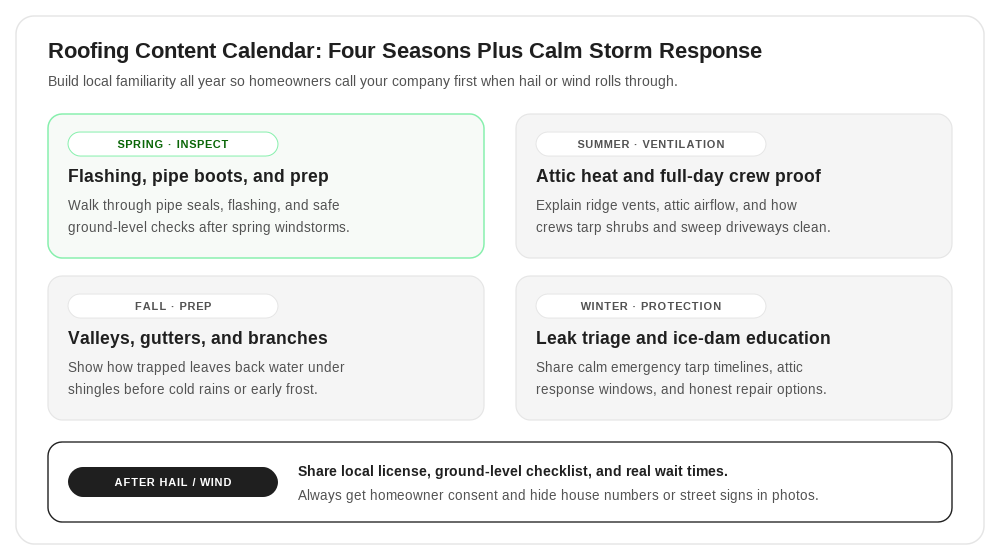
Waiting for hailstorms creates feast-or-famine scheduling. Publishing across all four seasons keeps your crew booked with steady retail replacements, preventative maintenance, real estate inspection repairs, and commercial flat-roof checks year-round.
| Season | What homeowners worry about | High-trust post topics to rotate |
|---|---|---|
| Spring (Mar to May) | Wind gusts, spring hail, aging seals around chimneys and vents | Pipe-boot wear close-ups, safe ground-level wind checklists, license verification reminders, clean tear-off tarping |
| Summer (Jun to Aug) | Sweltering upstairs bedrooms, shingle aging, scheduling replacements in dry weather | Ridge-vent and soffit airflow explainers, synthetic underlayment vs. felt, full-day install timeline from 7:00 AM drop to 5:00 PM magnet sweep |
| Fall (Sep to Nov) | Wet leaves clogging valleys and gutters, overhanging oak or pine limbs | Valley water-backup explainers, chimney counter-flashing checks, pre-winter inspection reminders before cold rain arrives |
| Winter (Dec to Feb) | Sudden ceiling stains, condensation vs. true roof leaks, ice dams in cold climates | Calm indoor leak triage (bucket, towel, attic photo), emergency tarping process, honest explanation of winter cold-seal installation limits |
Spring: Flashing, pipe boots, and calm storm readiness
Spring windstorms loosen aging ridge caps and expose dried rubber collars around plumbing vents. A 20-second clip holding a cracked ten-year-old neoprene pipe boot next to a fresh high-grade boot explains why small ceiling spots around bathrooms happen, and shows homeowners you gladly fix minor failure points instead of pushing unnecessary full replacements.
Summer: Attic ventilation and full-day job-site craftsmanship
When summer heat peaks, show how balanced intake (soffit vents) and exhaust (ridge vents) lower attic temperatures and protect shingle adhesives from premature curling. Pair educational posts with a clean “Day in the Life of a One-Day Tear-Off” carousel: 7:00 AM landscaping tarps going down, 10:30 AM rotted decking replaced cleanly, 2:00 PM ice-and-water shield laid in valleys, and 5:00 PM final magnetic nail sweep across the driveway and yard.
Fall: Valleys, gutters, and overhanging branches
Falling leaves trap moisture directly inside roof valleys and behind chimneys, forcing rainwater sideways beneath shingles. A simple overhead valley photo (taken with homeowner consent) showing cleared metal flashing versus debris buildup prompts timely maintenance calls before holiday travel and winter storms hit.
Winter: Leak triage, attic condensation, and honest scheduling
During colder or wetter months, homeowners often confuse bathroom exhaust condensation in the attic with an active roof leak. Sharing a calm diagnostic post explaining three signs of attic frost or moisture versus an active flashing leak earns enormous goodwill. Explain clearly how your emergency tarp response works during heavy rain and when permanent repairs safely resume once decking dries.
Calm post-storm communication: what to say after hail or wind
When a real hailstorm or severe wind event hits your county, homeowners feel stressed and suspicious of aggressive sales pitches. Your calm voice becomes your greatest competitive edge in the first 72 hours.
Replace fear-mongering with a safe ground-level checklist
Never tell homeowners to climb onto a steep, wet roof themselves. Publish a practical five-point check anyone can do safely from the sidewalk or yard:
- Downspouts and splash blocks: Look for fresh piles of dark shingle granules washed out of gutters.
- Soft metal dings: Check ground-level aluminum downspouts, window screens, patio furniture, or AC fins for fresh dimples that hint at hail impact overhead.
- Yard debris: Note any torn shingle tabs or ridge pieces sitting on the grass after high winds.
- Attic daylight and damp framing: Shine a flashlight into the attic after heavy rain to spot wet sheathing around chimneys or vent pipes.
- License and local history check: Remind neighbors to verify any contractor’s state license, local physical presence, and proof of liability plus workers’ compensation insurance before signing anything.
State real inspection wait times honestly
If 80 homeowners call on Monday morning after Sunday’s hailstorm, say so plainly: “We are prioritizing active leaks and emergency tarping first today, and booking standard hail inspections across [County] starting Wednesday morning. Every inspection includes labeled photos and a clear written summary of whether you need a repair, a replacement, or nothing at all.” Honesty under pressure wins loyal clients for life.
Job-site photos, drone privacy, and mandatory homeowner consent
A clean phone camera beats an expensive production crew when your shots show real workmanship honestly. However, roofing photos carry serious homeowner privacy responsibilities that crews cannot cut corners on.
Strict homeowner permission and address privacy standards
- Ask explicit permission before photographing or posting any property. Add a simple yes/no photo consent line to your completion walkthrough or ask the homeowner explicitly by text or in person before sharing exterior photos, drone flyovers, or review quotes. If a homeowner says no, honor it without hesitation.
- Hide every identifying clue in frame. Before uploading any curb shot, driveway cleanup clip, or drone image, verify that house numbers, mailbox names, street signs, neighboring windows, license plates, security cameras, and family members are completely out of frame or cleanly cropped away.
- Never post exact street addresses. Caption projects with the city or broad area only (“Architectural shingle replacement completed in North Tampa” or “Standing-seam metal repair in Cedar Park”), never “1428 Maple Oak Lane.”
- Keep safety gear visible. Ensure crew members shown in photos or video clips wear proper fall-protection harnesses, clean work gear, and safe ladder setup. Sloppy safety habits in a background frame destroy credibility with both homeowners and commercial property managers.
For deeper field-shooting angles and before-and-after habits, read our guide on job-site photos for social media.
Five copy-ready captions for roofing companies
Save these five templates for your office manager or crew lead, swapping in your real city, state license info, and Link Page address.
1. Local roots and anti-storm-chaser introduction
You will probably see plenty of unfamiliar trucks in [City / County] this spring. Before anyone climbs onto your roof, take two minutes to verify they will still be here five years from now.
[Company Name] has served [County] homeowners since [Year] (State License #[Number], fully insured with general liability and workers’ comp). Whether you need a single pipe-boot repair or a full replacement, we hand you clear photos from your roof and a straightforward written estimate with zero high-pressure sales scripts.
Save our number or tap our Link Page in bio to check credentials and request a calm inspection.
2. Clean job-site protection and magnetic nail sweep proof
Getting a new roof should never leave your shrubs crushed or stray nails hiding in the driveway.
On every [City] installation, our crew wraps landscaping with protective tarps before tear-off begins, shields siding and windows with plywood panels, hauls debris directly into our trailer, and runs rolling magnetic nail sweepers across the driveway, walkways, and lawn before we pull away.
Planning a roof refresh this season? Tap the link in bio to see our step-by-step installation checklist and schedule an estimate.
3. Honest repair vs. replacement explainer
Not every ceiling stain or missing shingle means you need a brand-new roof.
On this [City] inspection (shared with the homeowner’s permission), the shingles still had plenty of life left, while two ten-year-old rubber pipe boots had cracked from sun exposure and let wind-driven rain slip into the attic. A targeted flashing and boot repair solved the leak cleanly for a fraction of replacement cost.
Want an honest look at what your roof actually needs? Book a documented inspection at the link in bio.
4. Calm post-hail or windstorm ground-level checklist
Checking in across [County] after last night’s storm. Please stay safely on the ground and never climb onto a wet roof.
Here are four safe signs to check from your yard today:
- Fresh shingle granules piled at the bottom of downspouts
- Torn shingle tabs or ridge pieces on the lawn
- Fresh dents on soft aluminum downspouts or window screens
- Damp decking or daylight visible from inside your attic
Our local crews are prioritizing active leaks and emergency tarping first today, with routine inspections booking from [Day]. Tap our Link Page in bio to log your address and see live response windows.
5. Seasonal maintenance reminder (spring or fall)
Quick five-minute seasonal reminder for [City] homeowners before [heavy spring rains / fall leaves and winter frost] arrive:
Take a walk around your yard and look up at roof valleys, chimney flashing, and overhanging tree limbs. Trapped leaves and pine needles act like a dam inside roof valleys, pushing rainwater sideways underneath healthy shingles.
If you spot heavy debris buildup or lifted flashing, tap our Link Page in bio to book a preventative tune-up before peak storm season fills our calendar.
A 20-minute Friday routine and honest Spica Post trade-offs
Roofing owners and estimators do not have spare afternoons for marketing. Run this simple weekly loop with your foreman and office lead:
- During the week (3 minutes per job): With homeowner permission, have the crew lead snap four clean photos per finished roof: tarped landscaping, underlayment or flashing detail, finished wide roof slope (zero street numbers visible), and final driveway magnet sweep. Drop them into one shared folder.
- Friday afternoon (12 minutes): Pick two photos or one 20-second voiceover clip. Write one local proof post and one seasonal tip post, double-checking that no house numbers or unlicensed claims appear.
- Friday close (5 minutes): Reply warmly to every new Google review and confirm your Google Business Profile hours and service cities stay accurate. For local visibility fundamentals, see our guide on how to show up in near-me searches.
Honest trade-offs if you consider Spica Post
If you are checking Spica Post for roofers, here is the exact November 2026 platform picture for small businesses and creators:
- What is live today: Spica Post gives roofing companies a fast branded Link Page (ideal for holding your state license number, insurance note, service counties, inspection booking form, and printable SVG QR codes for yard signs, door hangers, and truck decals),
/l/tracked short links, brand-consistent drafting from your phone or connected AI assistant, scheduling, and live direct publishing plus Auto-crosspost to X, LinkedIn personal profiles (strong for HOA, real estate, and commercial contacts), Bluesky (with live Unified Inbox replies), and Mastodon. - What is built and completing network review: Because residential roofers rely heavily on Google Business Profile, Facebook Pages, Instagram, and YouTube Shorts, note plainly that Spica Post’s connectors for Google Business Profile (API approved and enabled in production; awaiting first live profile verification), Facebook Pages, Instagram, and Threads (completing Meta App Review), YouTube (OAuth approved; completing YouTube API Services compliance audit), TikTok, LinkedIn Company Pages, and Pinterest are built and completing platform review or verification. Until direct publishing finishes opening on Meta and Google across all workspaces, run your Link Page, QR codes, LinkedIn referral posts, X/Bluesky storm-status alerts, and draft calendar in Spica Post while pasting your two weekly job-site posts directly into Google Business Profile and Facebook in three minutes. See transparent flat workspace plans anytime on our pricing page or explore our Google Business Profile guide.
Build your local track record while the sky is clear: show real crews, protect every lawn, teach repair honesty, and publish across all four seasons. When the next storm passes through town, homeowners will already know whose local number to call.
Questions people ask
- How can an established local roofing company stand out from out-of-town storm chasers on social media?
- Publish consistent local proof months before hail or wind arrives: show your state roofing license number, local office or supply-yard pickups, branded trucks with familiar crew members, and finished neighborhood projects over multiple years. Storm chasers spin up fresh pages overnight; a real multi-year feed is impossible to fake.
- Which social platforms bring the best leads for roofing contractors?
- Google Business Profile captures urgent searchers looking for local roof inspections and leak repairs, Facebook Pages and neighborhood recommendations drive homeowner referrals, and short vertical videos on YouTube Shorts and Instagram Reels answer common questions about flashing, ventilation, and replacement timelines.
- Should roofers post about insurance claims after a hailstorm or windstorm?
- Focus on calm education rather than promising a 'free roof.' Explain safe ground-level signs to check from the driveway, how an honest written inspection report works, and when a targeted repair beats a full replacement. Always stay within your state's licensing and insurance-claim regulations.
- What privacy rules should roofers follow before posting drone or driveway job-site photos?
- Always ask the homeowner for explicit permission before photographing or sharing their home on social media or Google. Crop out or blur house numbers, street signs, license plates, security cameras, and family members, and name only the city or general neighborhood rather than the street address.
- What should a roofing company post during slow months when there are no major storms?
- Follow a four-season roof care calendar: spring pipe-boot and flashing checks, summer attic ventilation and shingle heat protection, fall valley and gutter debris awareness, and winter leak triage or ice-dam education, paired with clean tear-off protection and magnetic nail-sweep proof.
Sources
- Google Business Profile Help: Guidelines for representing your business (service-area businesses)
- Google Business Profile Help: Manage photos and videos for your Business Profile
- Federal Trade Commission (FTC): Picking Up the Pieces After a Disaster (avoiding contractor scams)
- National Roofing Contractors Association (NRCA): Consumer Resources for Choosing a Roofer
- Spica Post for Roofers: weekly posting examples and workflow