Content ideas
Slow Season Posting: What to Share When Business Is Quiet
Do not vanish for eight quiet weeks. Use four steady content pillars, profile tune-ups, and copy-ready captions to stay visible and pre-book peak season.
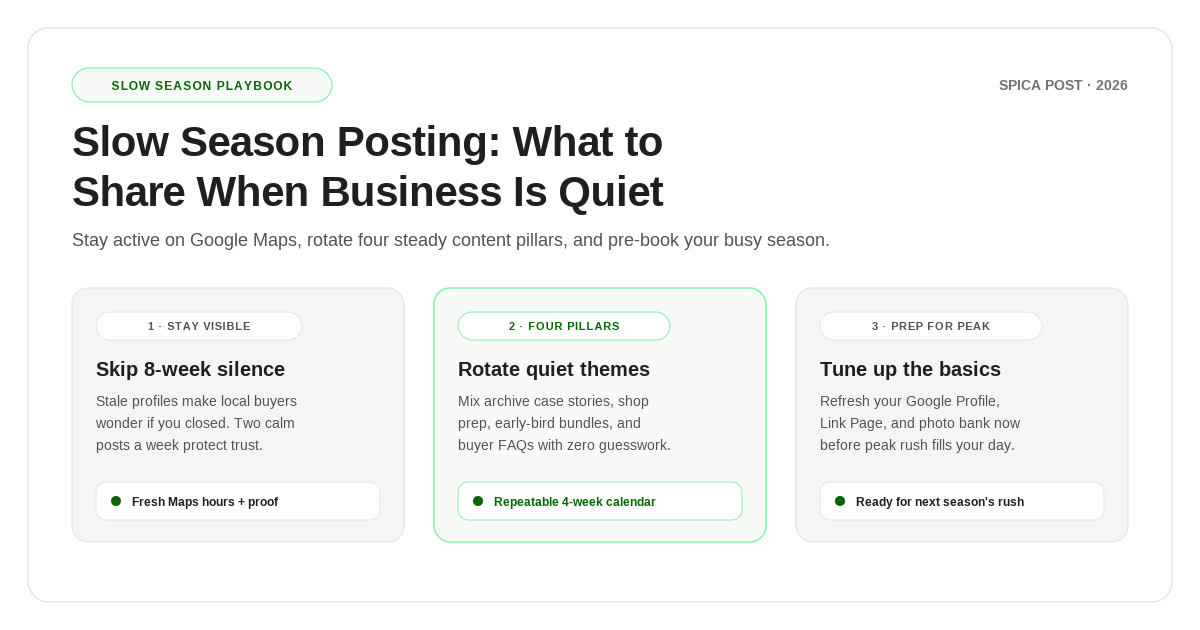
The best slow season social media ideas do not chase viral trends or beg followers to shop during a dead week: they rotate four low-stress pillars (archive transformations with client permission, behind-the-scenes prep, early-bird booking bundles, and buyer FAQs) at a calm pace of two posts per week while you tune up your Google Business Profile, Link Page, and photo bank. Staying steadily visible during quiet months proves you are still open, protects local search freshness, and locks in early deposits before busy season hits.
Nearly every local profession hits a predictable lull. Landscapers and pool crews stare at frozen yards in January, retail shops and restaurants catch their breath after December holidays, wedding planners and photographers watch inquiries slow in late fall, and tax preparers or academic tutors navigate calm summer weeks. When revenue dips, marketing is usually the first habit owners pause, yet disappearing for eight to twelve weeks creates a cold start right when buyers begin planning their next season.
This guide explains why going silent costs you peak bookings, maps slow-season opportunities across six real small-business professions, lays out a repeatable four-pillar posting system, shows how to use quiet weeks to strengthen your Google Business Profile and Link Page, gives you five copy-ready caption templates, and closes with a realistic batching routine and honest Spica Post trade-offs.
Why going silent for eight weeks costs you peak-season bookings
Going dark during a slow stretch hurts twice: first with prospective customers checking whether you are still open, and second with local search momentum right before seasonal demand ramps back up.
What buyers assume when your last post is two months old
Think about how you evaluate a local business you have never hired before. You search Google Maps, click over to their website or Instagram profile, and glance at their latest updates. If the newest post is a holiday greeting from ten weeks ago, no winter hours are listed, and recent reviews sit unanswered, two quiet doubts immediately surface: “Did they close?” and “If I fill out their quote form today, will anyone call me back?”
Buyers rarely investigate further when three competitors sit right below you in search results. Even during quiet months, early planners are quietly researching spring landscape renovations, summer camps, autumn weddings, or next quarter’s accounting support four to ten weeks before they actually spend money. Showing calm, reliable signs of life during the lull wins those early planners before peak-season advertising gets crowded and expensive.
How quiet-month freshness protects local Google Maps visibility
According to Google Business Profile guidance on improving local ranking, local search visibility rests on relevance, distance, and prominence, supported by complete and accurate business information, updated photos, and active review management. Keeping your hours accurate during off-season schedules (Google seasonal and special hours guidance), uploading crisp photos (Google Business Profile photo guidance), and publishing simple weekly updates (Google Business Profile posts guide) keeps your listing accurate and trustworthy all year long.
When slow season hits across six small-business professions
Every profession experiences quiet weeks at a different point on the calendar, and each lull pairs naturally with an early-booking goal for the season right behind it.
| Profession | Typical slow season | What local buyers research quietly | Best slow-season social goal |
|---|---|---|---|
| Landscaping & lawn care | Late November to February | Spring cleanups, patio redesigns, recurring mowing routes | Pre-book March and April cleanup slots and dense neighborhood routes |
| Retail shops & restaurants | January and February | Comfort meals, weekday specials, gift redemptions, Valentine’s and spring arrivals | Keep weekday regulars coming in and preview fresh spring stock |
| Event planners & photographers | Late fall and winter | Engagement sessions, spring graduations, summer and autumn wedding dates | Showcase last year’s best full galleries (with permission) and book deposits |
| Tax preparers & accountants | May through October | Quarterly bookkeeping cleanup, business entity changes, year-end tax planning | Convert one-off spring filers into calm monthly bookkeeping clients |
| Tutors & music teachers | Mid-summer lull (June and July) | Fall school readiness, back-to-school schedules, flexible summer refreshers | Fill recurring September weekday slots before August chaos |
| HVAC & home services | Mild shoulder months (spring/fall) | Preventive tune-ups, filter checks, system replacements before extreme weather | Book preventive maintenance visits that keep crews busy before emergency calls |
If you want deeper seasonal calendars tailored to specific professions, explore our playbooks for landscaping companies, HVAC companies, accountants, and restaurants.
The four-pillar slow season posting plan
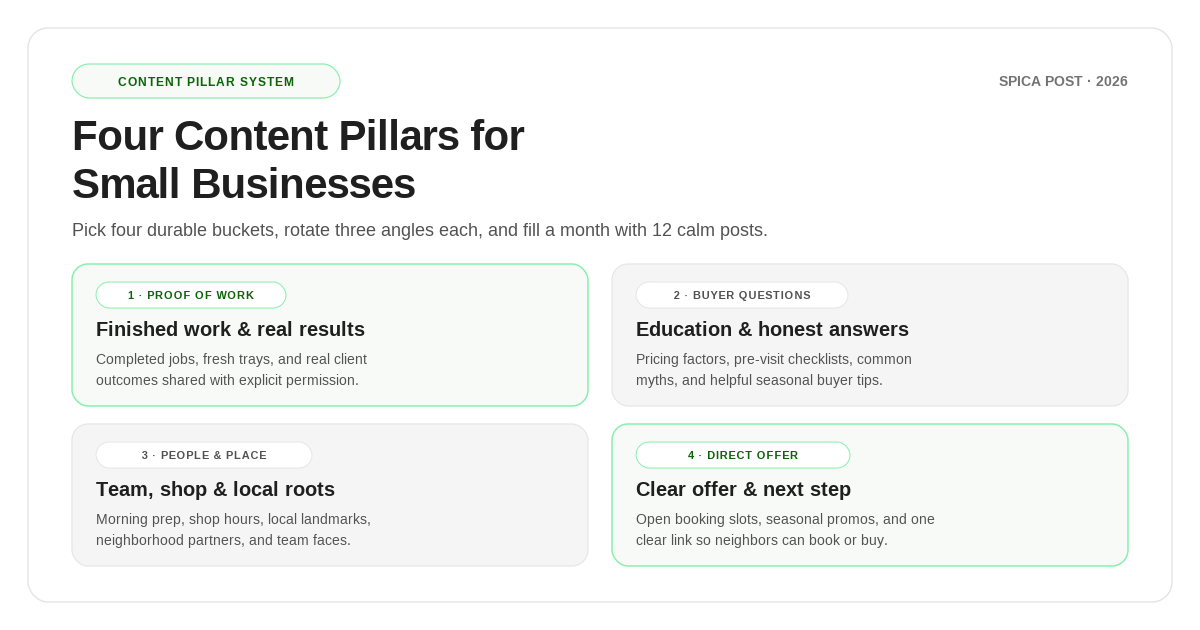
When live customer traffic slows down, trying to invent clever posts from scratch every Tuesday feels exhausting. Replace brainstorming with four simple pillars that never require a packed shop or fresh job site every single week.
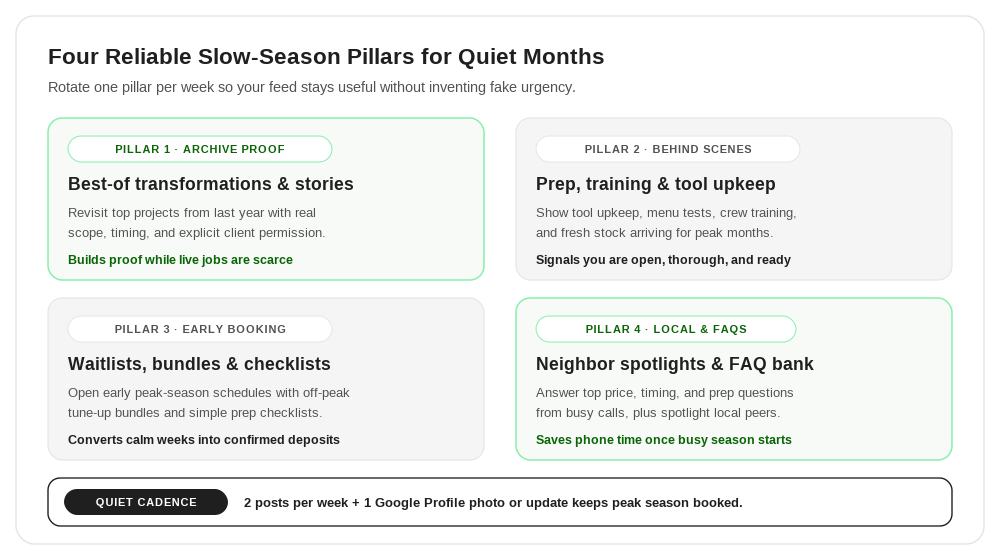
Pillar 1: Archive best-of transformations and real case stories
During busy season, you probably snapped dozens of quick finished-job photos, plate shots, or before-and-after angles that never got posted because you were too exhausted to write captions. Quiet weeks are the ideal moment to open last year’s camera roll and turn your strongest five or ten projects into clear, educational mini case stories.
Instead of just writing “Throwback to last July!”, walk readers through three real facts buyers care about: what the customer needed when they reached out, what specific steps or materials solved the problem cleanly, and how long the job or order took from start to finish. If you are a landscaper, explain why native perennials survived a dry August. If you run a bakery, show a complex tiered cake from last spring and explain how many weeks ahead custom orders should be reserved.
Always respect explicit customer permission whenever revisiting archive files. Before posting identifiable homes, yards, private events, customer faces, or quoted testimonials from past jobs, confirm written or documented verbal permission from the client, blur or crop license plates and house numbers, and skip personal surnames unless the customer explicitly agreed to be named.
Pillar 2: Behind-the-scenes prep, training, and tool maintenance
Customers love buying from small businesses and creators who care about craft even when nobody is watching. Quiet months are naturally full of unglamorous preparation that makes compelling, authentic social proof:
- Equipment and shop upkeep: Sharpening mower blades, servicing service vans, deep-cleaning espresso machines, recalibrating studio lights, or reorganizing tool walls so crews arrive faster in spring.
- Training and certifications: Attending a regional workshop, renewing safety or tax licenses, cross-training a newer team member, or testing safer eco-friendly supplies.
- Menu, product, and inventory prep: Testing three new spring menu items in the kitchen, unpacking fresh seasonal fabric bolts, photographing incoming retail stock in clean window light, or auditing supplier lead times.
One bright daytime phone photo of a freshly organized shelf, a serviced piece of equipment, or a test batch paired with three honest sentences about why that prep makes life smoother for customers next month communicates reliability far better than generic motivational quotes.
Pillar 3: Early-bird booking, tune-up bundles, and next-season checklists
Smart off-season marketing does not beg for instant cash today; it makes planning ahead feel easy and rewarding. Give organized buyers three clear ways to take action while your calendar still has prime openings:
- Priority peak-season route or date locks: Invite returning clients and local followers to claim prime spring, summer, or holiday dates four to eight weeks early with a clear booking link.
- Preventive off-peak tune-ups or bundled value: Instead of slashing core rates by 30%, bundle helpful maintenance (such as an off-season HVAC safety inspection plus filter swap, a winter accounting cleanup review, or a slow-Tuesday restaurant dinner-for-two bundle with dessert included).
- Save-worthy preparation checklists: Publish a crisp five-item checklist buyers can screenshot right now (“5 things to inspect on your patio before spring rains,” “4 documents to gather before March tax prep,” or “3 measurements to take before ordering custom blinds”). Checklists earn saves, shares with spouses or coworkers, and warm inquiries weeks later.
Pillar 4: Neighborhood spotlights and your buyer FAQ bank
Every owner answers the same eight or ten questions on phone calls all peak season long: “How far in advance do I need to book?”, “Do you serve [Neighboring Suburb]?”, “What is included in a standard visit?”, “How do cancellations or rain delays work?” Quiet weeks give you breathing room to turn every recurring question into a dedicated, crystal-clear post.
Pair your FAQ posts with genuine neighborhood spotlights. Visit the local coffee roaster down the block, thank the hardware supplier who always stocks specialty parts, or share a calendar note for the town’s winter farmer’s market or charity food drive. Tagging complementary neighboring small businesses (never direct competitors) builds real community goodwill and introduces your name to local audiences organically. For extra angles on days your mind feels blank, keep our guide on what to post when you have nothing to say bookmarked alongside this plan.
Use quiet weeks to fix the foundation you never have time for
Half the payoff of a slow season happens behind the scenes on the profiles and assets that turn future visitors into booked customers. Block one calm two-hour session during your quietest week to upgrade three high-leverage assets.
Refresh your Google Business Profile, hours, and service list
Open your Google Business Profile from a customer’s perspective on both desktop and mobile and work through a clean five-point tune-up:
- Verify seasonal and holiday hours. Update shorter winter hours or upcoming holiday closures under Special Hours so nobody drives over to a locked door.
- Audit your primary and secondary categories and services. Add any new services you started offering last year and write plain two-sentence descriptions naming your city and neighborhood service areas.
- Upload ten crisp photos from last season. Refresh your exterior photo, team shot, and top service results (always with customer permission for client work) so Google Maps displays clean, recent visuals.
- Answer every lingering review and Q&A entry. Thank past reviewers warmly and make sure common questions (parking, walk-ins, service radius, estimates) are clearly answered.
- Publish one fresh off-season Google Update. Post a simple update highlighting current hours, off-peak turnaround times, or early-bird spring/peak scheduling with a direct booking button.
Clean up your Link Page and build an evergreen photo bank
Take fifteen minutes to inspect the link sitting in every social bio. During a slow season, many small businesses still leave an expired holiday sale, an out-of-stock seasonal menu, or a broken form right at the top of their profile.
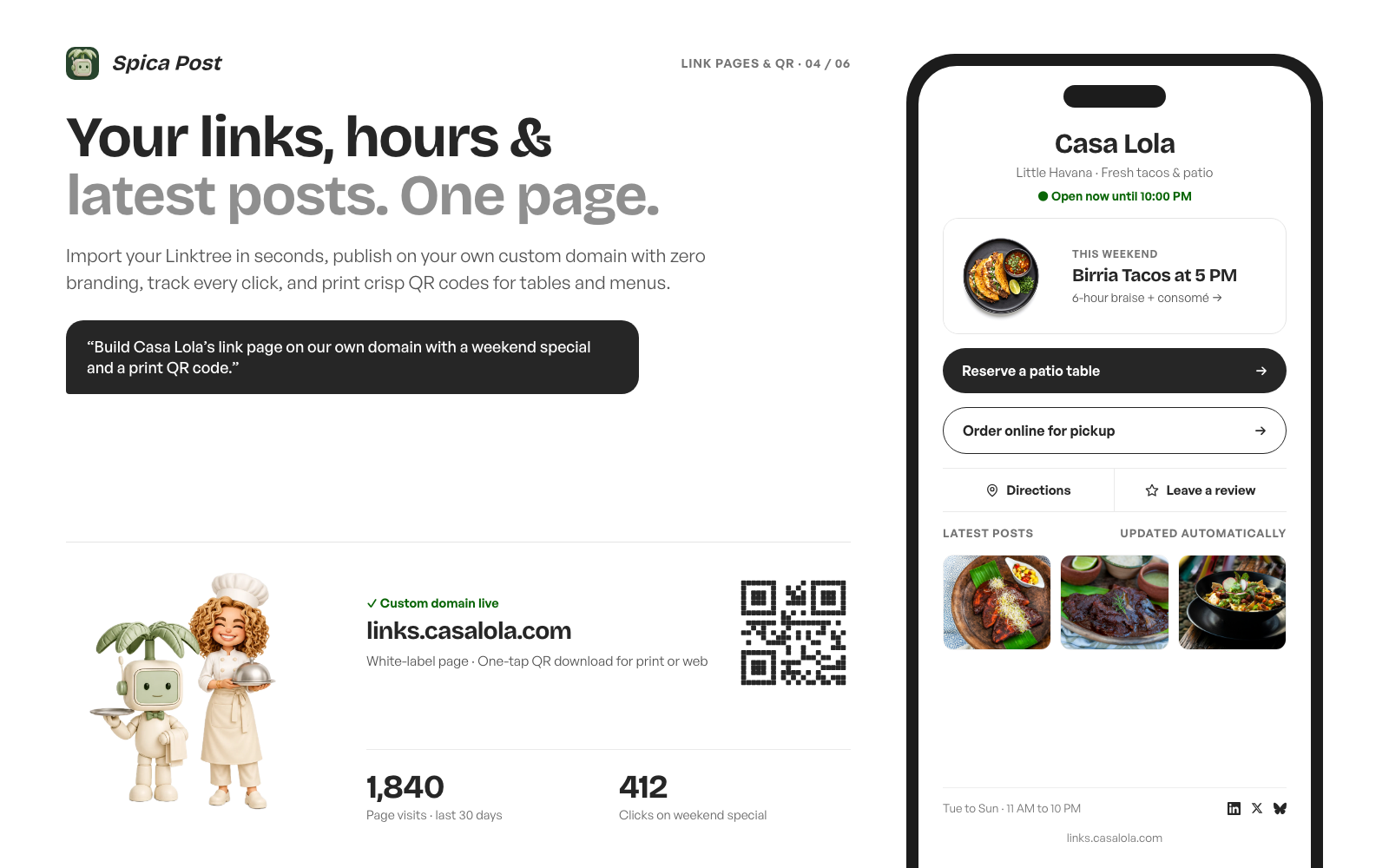
Swap your top Link Page box to match what buyers need right now: a clean “Reserve [Next Season] Dates Early” button, a “Current Off-Season Hours & Quick Quote” card, your core services or menu, and a direct link to leave a Google review. While things are quiet, also build an evergreen photo bank: pick your best 30 to 50 bright, uncluttered photos from the past year, sort them into four labeled folders (Transformations, Team & Shop, Products & Tools, Seasonal), write a short alt-text caption and note confirming client permission beside each one, and store them in your main brand folder. When busy season explodes in a few weeks, pulling a ready-to-publish photo will take thirty seconds instead of half an hour.
Five copy-ready slow season caption templates
Copy these five templates into your notes app or scheduling drafts and swap the bracketed placeholders with your real city, profession, and Link Page address.
1. Archive case story with a real lesson (with client permission)
Looking back at one of our favorite [City] projects from last [Season] (shared with our client’s permission):
When this homeowner called us, [describe the real problem in one plain sentence]. Our team handled [two concrete steps or materials used] and wrapped the whole job in [exact timeframe].
Sharing this now because [Next Season] slots fill fast once the weather turns. If a similar project is on your list for [Month], tap the link in our bio to request an early estimate while turnaround times are wide open.
2. Behind-the-scenes maintenance and prep
Quiet weeks on the calendar do not mean quiet days in the shop.
Today we are [specific prep task, e.g., servicing all three lawn rigs, sharpening every blade, and restocking commercial mulch supplies / testing two new seasonal lunch bowls] so everything runs smoothly the moment [Next Season] kicks off in [City].
Taking care of the details now is how we show up on time and deliver consistent work when the rush hits. Need help before peak season arrives? Our hours this month are [Days & Times], and our contact link is right in our bio.
3. Early-bird booking or waitlist invitation
Early booking for [Next Month / Season] is officially open for [City and Nearby Areas].
Every year by mid-[Peak Month], our best weekday and weekend slots book out [number] weeks ahead. If you already know you want [Core Service, e.g., spring yard cleanup, a pre-summer AC tune-up, or fall family portraits], locking in your spot during [Current Quiet Month] guarantees first pick of dates and zero rush.
Tap [Button Name] on our Link Page in bio to grab a slot or join our priority list in under two minutes.
4. Save-worthy pre-season buyer checklist
Save this 60-second checklist before [Next Season] arrives in [City]:
Taking ten minutes to check these now usually saves money and wait time once everyone calls at once. Have a quick question about step 2 or 3? Drop it in the comments and we will answer plainly.
5. Buyer FAQ answer plus neighbor spotlight
Question we hear every single [Busy Season]: “[Exact common question, e.g., How far ahead should we book custom cakes / Do you handle small repair visits in Northside?]”
Short answer: [Two clear, honest sentences covering real turnaround, pricing structure, or service area].
Also sending a quick thank-you to our neighbors at [@LocalBusiness] on [Street] who kept our crew fueled with hot coffee all week during winter prep. Supporting fellow [City] small businesses makes quiet months a whole lot brighter.
A calm 2-posts-per-week slow season rhythm (and 4 traps to skip)
You do not need daily videos or frantic promotions during an off-peak month. A steady two-post-per-week cadence paired with one weekly Google Business Profile touch takes less than an hour a week and cycles naturally through all four pillars.
| Week | Tuesday post (Proof or education) | Friday post (Human or action) | 5-minute Google Profile task |
|---|---|---|---|
| Week 1 | Pillar 1: Archive case story or transformation (with client permission) | Pillar 3: Early-bird booking or off-peak tune-up offer | Upload 2 clean photos from your evergreen bank |
| Week 2 | Pillar 4: Answer one top customer FAQ plainly | Pillar 2: Behind-the-scenes maintenance, training, or menu test | Publish a short Google Update naming current hours and turnaround |
| Week 3 | Pillar 3: Save-worthy 4-step pre-season checklist | Pillar 4: Local neighbor spotlight or community event mention | Reply warmly to any recent reviews and check Q&A |
| Week 4 | Pillar 1: Second archive story explaining timeline and scope | Pillar 2: Fresh inventory, seasonal preview, or team check-in | Confirm next month’s special/holiday hours are accurate |
Four slow-season mistakes that backfire fast
Avoid these four habits that quietly hurt trust during slow stretches:
- Posting guilt-driven “please come in, we are dead” pleas. Buyers sympathize with local owners, yet desperation posts often make people worry about freshness, staffing, or quality. Frame calm weeks positively around faster turnaround times, unhurried personal attention, and early pick of peak dates.
- Slashing core prices permanently out of panic. Running a 40% blanket discount in January trains loyal buyers never to pay full price in March. Protect your core rate and build structured off-peak value instead (bundles, priority scheduling, or preventive maintenance packages).
- Vanishing for two months and then posting ten times in one week. Sudden bursts look automated and miss the early planners who already hired a steady competitor in February.
- Leaving stale holiday hours and expired offers pinned. Outdated banners and wrong opening times cost you the few high-intent buyers actively searching right now.
Batching quiet months in one afternoon (and honest Spica Post trade-offs)
Because your daily workload is lighter during a slow month, batching works even better now than during peak season. Set aside one calm 60-minute block at the start of the month: pick four photos from your evergreen bank, adapt four templates above to your voice, update your Link Page announcement box, and schedule all eight posts for the month in one sitting. If you want a step-by-step timer for drafting an entire month quickly, follow our batching social media posts guide or pull fresh prompts anytime from Spica Post’s post ideas library.
Honest November 2026 trade-offs if you consider Spica Post
If you are checking how Spica Post fits a quiet-month workflow for small businesses and creators, here is the exact November 2026 status matching our live product:
- Live today: Spica Post gives you a branded Link Page (with editable announcement boxes for off-season waitlists, printable SVG QR codes, and
/l/click-tracked short links), a searchable Asset Library (/media) for organizing your evergreen photo bank with alt text and tags, branded post templates, local keyword research to spot seasonal searches before demand spikes, drafting in your own voice, and direct scheduling plus Auto-crosspost across X, LinkedIn personal profiles, and Bluesky (plus Mastodon on any public server, built with zero central app review). - Built and completing platform review or verification: Because local businesses rely heavily on Google Business Profile, Instagram, and Facebook Pages during quiet months, note plainly that Spica Post’s connectors for Google Business Profile (approved and enabled in production, awaiting first live service-area profile verification), Instagram, Facebook Pages, Threads, LinkedIn Company Pages, TikTok, and YouTube are built and finishing each network’s approval or compliance audit. Until direct publishing opens across Meta and Google for all workspaces, keep your evergreen media bank, Link Page offers, and X/Bluesky/LinkedIn queue running in Spica Post while pasting your two weekly captions cleanly into Instagram, Facebook, and Google Business Profile in five minutes. Review current flat workspace plans and scheduling windows anytime on our pricing page.
Quiet months are not wasted time; they are your cleanest chance to build proof, fix your profiles, and greet peak season with a full calendar. Pick two pillars from the table above, queue your next two weeks today, and keep your business unmistakably open.
Questions people ask
- How often should a small business post during its slow season?
- Two well-chosen posts per week plus one fresh Google Business Profile photo or update is plenty during a quiet stretch. That steady rhythm signals to local buyers and Google Maps that you are open and active without burning energy trying to post every single day when few new jobs are happening.
- Why does going silent for two months hurt bookings when busy season returns?
- Local buyers checking Instagram, Facebook, or Google Maps look at the date of your most recent post and photo before calling. When a profile sits untouched for eight or twelve weeks, customers often assume you closed permanently, stopped taking new clients, or are slow to answer inquiries, so they call a competitor whose page looks active.
- What can I post when I have no new client jobs to photograph?
- Rotate four reliable slow-season pillars: best-of archive transformations and project stories from last year (always with explicit client permission), behind-the-scenes prep like tool upkeep, menu testing, or training, early-bird booking bundles and prep checklists for next season, and answers to the exact questions buyers ask during peak season.
- Should I run deep discounts during my slow season to get attention?
- Avoid slashing core prices across the board, which trains regulars to wait for markdowns and shrinks margins when demand returns. Instead, offer structured off-peak value such as preventive tune-up bundles, priority spring or fall route locking, small deposit holds, or bundled add-ons that fill calm calendar slots profitably.
- Do I need customer permission before reposting old project photos or testimonials?
- Yes. Even when a photo sat in your camera roll from last year, always confirm explicit client permission before posting identifiable homes, yards, events, faces, or quoted customer praise, and omit private street addresses or sensitive personal details.