Personal trainers
Social Media for Personal Trainers and Gyms: Win Local Clients
Replace intimidating physique hype with welcoming studio walkthroughs, 20-second form cues, realistic milestones, and one-tap intro-session booking.
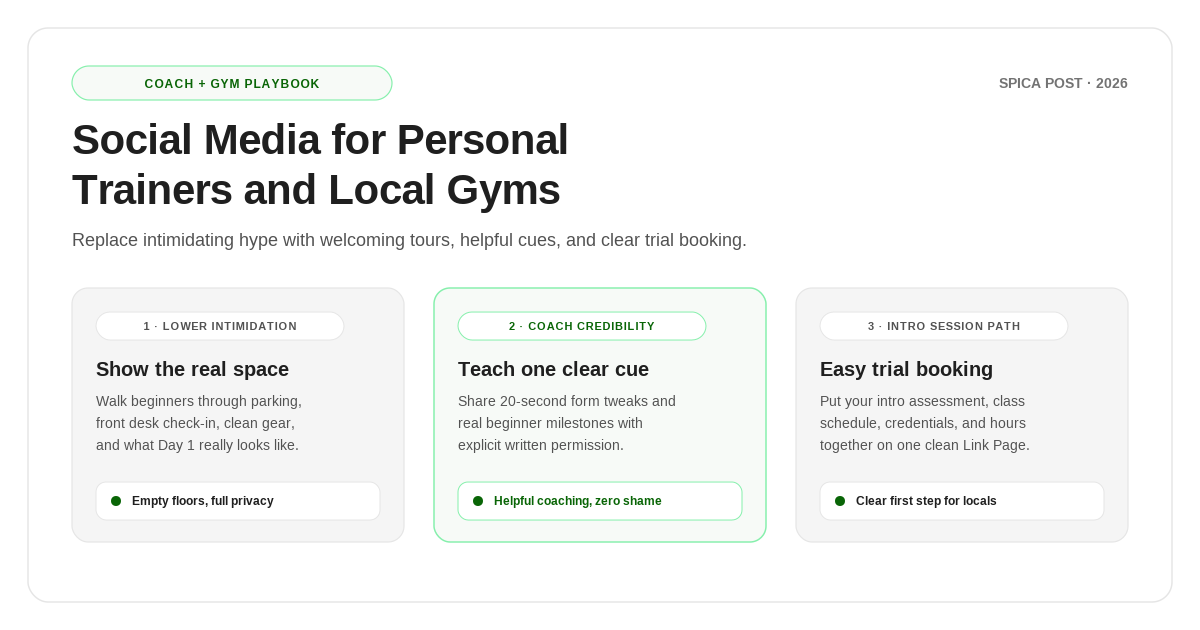
Social media for personal trainers and neighborhood gyms works best when it solves a beginner’s quietest fear: “Will I feel embarrassed, lost, or pushed too hard the day I walk through the door?” Independent strength coaches, private studios, and community gyms rarely lose local members to a lack of heavy barbells; they lose them to intimidation, murky intro-session details, and feeds copied from national fitness influencers who sell supplements rather than local coaching.
A full client roster in one neighborhood does not require 50,000 followers or shirtless mirror selfies. Twenty steady local clients paying for weekly coaching or 120 loyal members filling small-group classes come from clear, grounded visibility: welcoming space walkthroughs, crisp 20-second form cues, realistic beginner milestones shared with explicit written consent, strict respect for gym-floor privacy, and one frictionless Link Page for booking a low-pressure intro visit.
This guide walks through why approachable coaching beats physique hype, four profile blockers to clear before your next post, where local clients actually search in November 2026, a four-step trust ladder that fills intro sessions, firm gym-floor camera etiquette, five copy-ready caption templates, a four-season local calendar, and a 25-minute off-peak content routine.
Why hyper-ripped influencer feeds push local beginners away
Most people browsing for a personal trainer or local gym are not preparing for a bodybuilding stage. They are accountants whose lower back aches from sitting all day, new parents rebuilding stamina, retirees protecting bone density and balance, or adults in their thirties and fifties returning to movement after years away. When those neighbors open an account packed with aggressive “no excuses” yelling, extreme dehydration physique checks, and heavy 400-pound drops, they do not feel inspired. They feel out of place and close the app.
Local coaching is a trust business, not an entertainment contest
National fitness creators optimize for watch time from strangers worldwide because their revenue comes from ad share, apparel codes, and low-cost PDF programs. Local coaches and gyms and studios run a completely different business model. You need a modest circle of neighbors within a 15-minute drive who trust your judgment, enjoy spending two or three hours a week with you, and tell their coworkers your studio is welcoming.
A calm 25-second video showing three ways to modify a push-up for sore wrists might earn only 350 local views, yet two of those viewers live eight blocks away and book an assessment that afternoon. Meanwhile, a viral rant arguing over optimal bicep angles draws 40,000 arguments from teenagers across the ocean and fills zero Tuesday morning training slots.
What cautious local beginners actually check before booking
Before messaging a coach or booking a trial pass, everyday adults quietly look for five signals across your Google listing, social profiles, and Link Page:
- Approachability of the space: Is the floor tidy, well-lit, and easy to navigate, or crowded and chaotic?
- Coach demeanor and credentials: Do you explain movements patiently and state your real certifications, continuing education, and populations you love coaching?
- Who already trains there: Do members look like real neighborhood people of varied ages and starting fitness levels, or only elite athletes?
- Exact mechanics of Day 1: How long is the intro session, what does it cost, where do I park, and will I be pushed into an awkward high-pressure sales pitch at the end?
- Respect for personal dignity: Does this coach protect privacy on the gym floor and avoid shaming language?
Fix four booking blockers before recording your next clip
Inspect your public accounts like a nervous beginner checking on Sunday evening after deciding “this month I am finally finding a coach.” Clearing these four blockers multiplies the return on every post you publish next:
- A bio without your city, coaching focus, or next step. Lines like “Certified Coach · Helping You Reach Your Potential” tell locals nothing. Put your city, who you help most, and where to book in the first two lines: for instance, “Strength Coaching for Busy Adults in South Denver · Beginner-Friendly Private Studio · Tap below to book a calm 45-min intro session.”
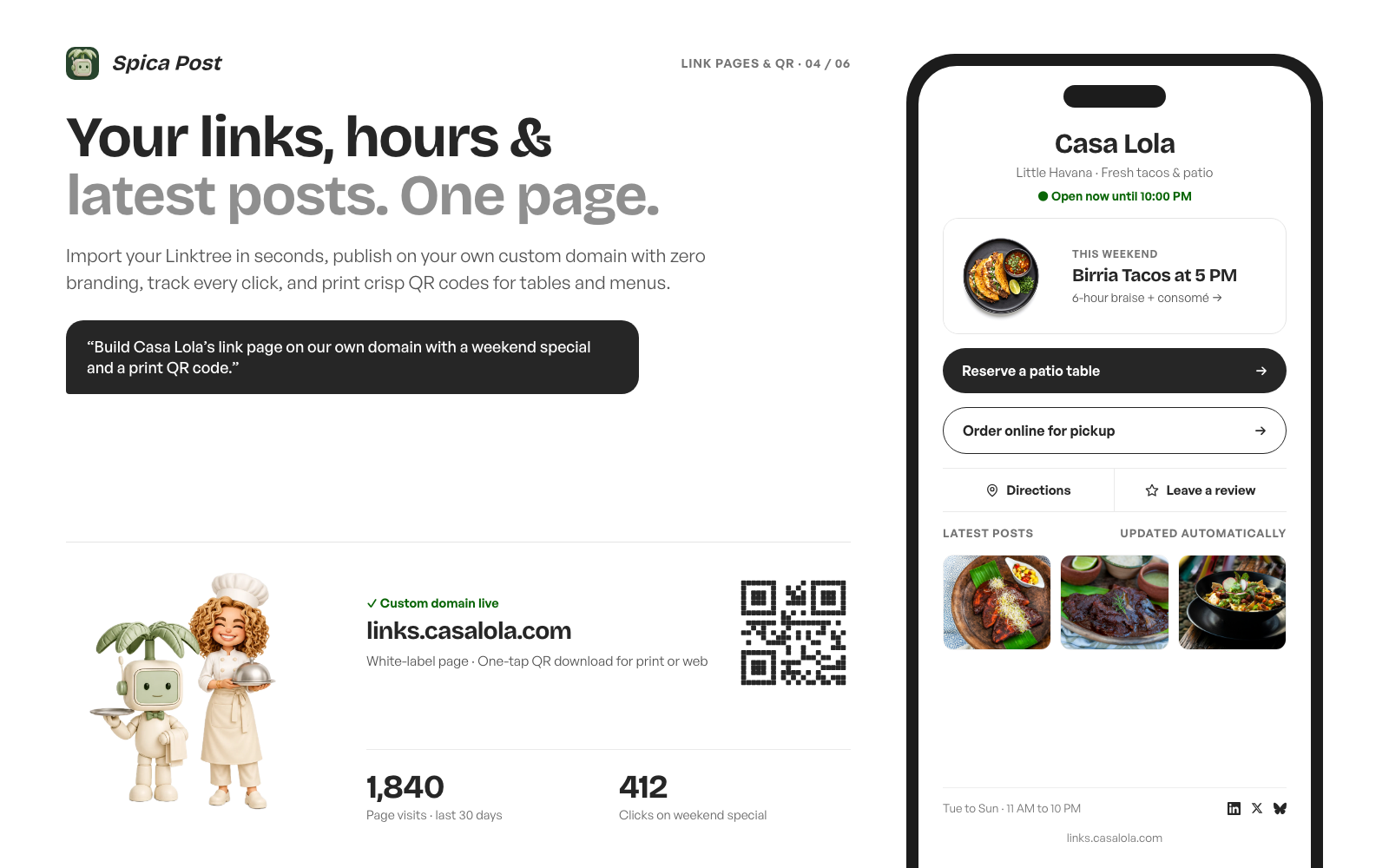
- Vague DM-only booking instead of a clear mobile Link Page. Making shy prospects type “hey how much do you charge?” into a cold direct message loses half your quietest, best-fit leads. Put one clean Link Page in every social bio and display its QR code on your front desk or water-bottle cubby. Include four straightforward items: Book a Low-Pressure Intro Session (stating exact duration, cost, and what to wear), Weekly Class or Coaching Hours, Meet the Coach & Credentials, and Parking + Studio Map.
- An outdated Google Business Profile. Locals searching “personal trainer near me”, “beginner gym [Neighborhood]”, or “strength studio [City]” open Google Maps before scrolling Instagram. Follow Google Business Profile guidelines: confirm your exact categories, street address or service area (if you train clients in-home or outdoors), open hours, bright empty-floor photos, and thoughtful replies to every client review (see our Google review response guide).
- Hidden credentials and coaching philosophy. People trust professionals who explain how they work. Pin one concise post introducing your certifications, years coaching, injury-aware progression philosophy, and how you tailor sessions for complete beginners.
Where local fitness clients actually search in 2026
Snapshot verified November 2026. Coaching clients from 6:00 AM through 7:00 PM leaves zero margin for posting across nine platforms daily. Anchor your week on the channels where local adults verify credibility and book trials.
| Channel | What local prospects do here | Best weekly job for trainers and gyms | Current Spica Post status (Nov 2026) |
|---|---|---|---|
| Google Business Profile | Searches “personal trainer near me” or “gym [City]”, checks reviews and hours | 1 weekly studio/class update with clean photo + timely review replies | Built and enabled in production; awaiting first live service-area profile verification |
| Branded Link Page | Reviews intro-session details, class times, parking, credentials, and books | Permanent bio hub and front-desk referral QR code | Live today in Spica Post with custom boxes and printable SVG QR codes |
| Instagram Feed, Reels, and Stories | Checks coach voice, studio atmosphere, beginner cues, and community warmth | 1 welcoming walkthrough or 20-sec form cue Reel, 1 clear photo/carousel, plus Stories | Built; completing Meta App Review |
| Facebook Page and local groups | Neighborhood parents, adults 35+, community recommendations, studio events | Mirror your weekly walkthrough, intro offer, and beginner Q&A | Built; completing Meta App Review |
| LinkedIn (personal profile) | Busy professionals, local founders, HR leads booking corporate wellness or 1-on-1 coaching | Weekly desk-mobility tip, realistic strength routine for busy schedules, or private slot notice | Live direct publishing today |
| YouTube Shorts and TikTok | Locals browsing exercise form fixes and searching neighborhood studios | Optional: cross-share the exact same 20-second form cue naming your city | Built; TikTok in review, YouTube OAuth approved and completing compliance audit |
| X, Bluesky, and Mastodon | Local residents, runners, cyclists, and community accounts | Optional quick schedule alerts, open coaching slots, and short form tips | Live direct publishing and Auto-crosspost today (Bluesky Unified Inbox also live) |
Solo personal trainer versus neighborhood gym channel priorities
Tailor your effort to how you actually deliver sessions:
- Independent 1-on-1 and semi-private personal trainers thrive on Google Business Profile, Instagram, a strong Link Page, and personal LinkedIn. Busy executives and professionals on LinkedIn routinely hire calm, reliable morning coaches when they see realistic two-day-a-week strength advice rather than gym-bro slogans.
- Neighborhood gyms, strength clubs, and yoga and Pilates studios get their steadier stream of trial passes from Google Business Profile, Instagram, and Facebook. Showing class pacing, approachable instructors, clean locker rooms, and exact beginner class times turns hesitant lurkers into Saturday morning first-timers.
If you feel hesitant about stepping in front of your phone camera at all, read our practical guide on showing your face on business social media to choose comfortable formats that fit your personality.
The local fitness trust ladder: four weekly posts that fill intro sessions
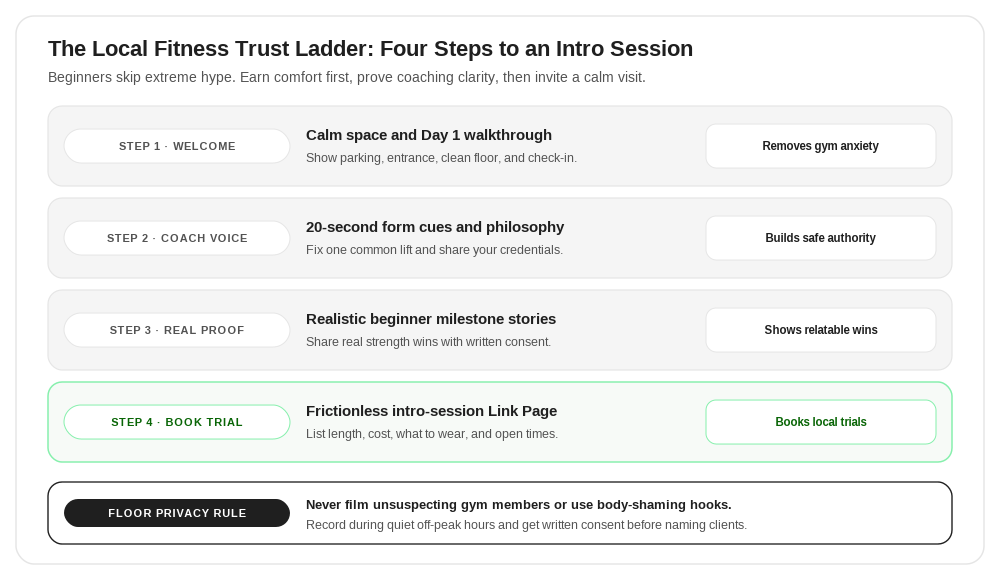
Instead of staring at your phone between sessions wondering what to film, climb the same four-rung trust ladder every week. Each post moves a cautious neighbor one calm step closer to booking their first visit.
| Ladder step | Weekly slot | Concrete post angle | Primary job |
|---|---|---|---|
| Step 1 · Welcome | Monday · Morning | 20-second entrance-to-floor studio tour showing parking, reception, clean racks, and Day 1 check-in | Dissolves gym intimidation |
| Step 2 · Coach Voice | Wednesday · Midday | One 20-second beginner form cue (feet, breathing, grip, or joint-friendly setup) plus short caption | Proves safe, clear coaching |
| Step 3 · Real Proof | Friday · Morning | Realistic client milestone (with explicit written permission) or plain Q&A on coaching philosophy and credentials | Builds relatable credibility |
| Step 4 · Book Trial | Weekend or Google | Low-pressure intro-session invitation explaining exact length, cost, what to bring, and open next-week times | Turns lurkers into booked visits |
Filming welcoming studio walkthroughs that dissolve Day 1 nerves
Think about how intimidating an unfamiliar gym door feels when you have not lifted a weight in four years. Walk outside to the curb during a quiet hour when the room is empty, press record, and walk inside slowly for 20 seconds: “Here is exactly what happens when you arrive for an intro session at [Studio Name] in [City]. Park free in the back lot off Oak Street, step inside the side glass door, grab a spot on the bench, and we start with a 10-minute chat over water before touching a single weight.”
That one calm video answers five unspoken anxieties better than ten graphics screaming “50% OFF BOOTCAMP!” Pin your clearest walkthrough to the top of your Instagram grid and embed the key arrival notes on your Link Page.
How to structure 20-second form cues beginners actually save
Keep every form video tightly scoped to one everyday pain point so a beginner can try it safely at home or during their next workout:
- Name the exact frustration in 3 seconds: “Feel your lower back instead of your glutes during hip bridges?” or “Wrists sore during push-ups?”
- Show one simple adjustment slowly: Demonstrate the calmer setup cleanly from the side against an uncluttered wall (for example, elevating hands onto a sturdy bench or tucking ribs gently before lifting).
- Explain the plain-English cue once: Skip heavy Latin muscle names. Say “Push the floor away evenly through your whole foot” instead of lecturing on biomechanical torque vectors.
- End with a gentle local bridge: “We walk through simple setups like this during every intro session in [City]. Link in bio if you want a patient starting plan.”
Sharing realistic milestone stories with written permission and honest claims
Sustainable fitness builds gradually. The U.S. Department of Health and Human Services Physical Activity Guidelines for Americans emphasize regular, steady weekly movement and muscle-strengthening activity rather than extreme crash cycles, and the Federal Trade Commission health compliance guidance is equally clear that health and fitness claims must stay truthful and non-deceptive.
Celebrate realistic, meaningful progress that ordinary neighbors recognize as life-changing:
- A client who arrived nervous about knee stiffness completing their first confident set of box squats after eight steady weeks.
- A busy nurse who kept two 45-minute strength sessions a week for six straight months without burning out.
- A parent who noticed carrying two toddlers and heavy groceries up the stairs suddenly felt easy.
- A 62-year-old member hitting their first pain-free overhead press or improving balance on single-leg steps.
Always avoid body-shaming comparisons, disparaging “before” posture photos, or guaranteed pound-loss claims. Most importantly, only share a client’s name, photo, clip, or milestone after obtaining explicit written permission and letting them review the exact wording first.
Gym-floor privacy etiquette every coach and studio must enforce
Nothing erodes trust inside a neighborhood gym faster than members realizing a tripod might be recording them while they sweat, learn a new lift, or catch their breath. Making floor privacy an explicit studio value protects current members and reassures prospective beginners.
The camera-off rule for unsuspecting gym members
Set a crisp studio policy and follow it visibly yourself:
- Never film unsuspecting members in the background. Check behind you and inside every wall mirror before tapping record. If someone walks into frame, pause, delete the stray clip, and reshoot once the floor is clear.
- Schedule filming strictly during quiet off-peak hours. Record your two weekly walkthroughs and form cues 15 minutes before the first morning session or during the mid-afternoon lull when the studio is empty.
- Avoid filming vulnerable angles of clients even during consented sessions. Frame form checks respectfully at neutral angles, keep background lockers and personal gear out of view, and never livestream active general-membership floor hours.
- Post respectful camera guidelines on the gym wall. When members know your space is a calm, camera-conscious environment rather than an influencer tripod maze, retention climbs noticeably.
Collecting written client consent for testimonials and progress stories
Keep media consent completely separate from your training liability waiver so no member ever feels forced to sign away camera rights just to work out. Use a short, standalone opt-in form (or simple written message confirmation) asking whether a client is comfortable sharing a quote, first name only, or a planned photo/video clip, with an explicit note that saying “no” is always welcome and that they can ask to remove any post later. Respecting boundaries online proves you respect boundaries on the training floor too.
Five copy-ready captions for personal trainers and neighborhood gyms
Keep these five templates in your phone notes and adjust the brackets to match your studio, credentials, and Link Page address.
1. Welcoming Day-1 walkthrough and parking guide
Nervous about walking into a new gym for the first time? Here is exactly what your first visit to [Studio / Gym Name] in [City] looks like from the parking lot to the floor.
Free parking sits right beside [Landmark / Side Street]. When you step inside, [Coach Name] meets you at the desk for a relaxed 15-minute conversation about your goals, schedule, and any old knee, shoulder, or back quirks before we try a few light movements at your pace. Zero shouting, zero crowding, and zero pressure.
Ready to see the space for yourself? Tap our bio link to book a calm [Length]-minute intro session and check open times for next week.
2. Practical 20-second beginner form cue
If [Common Exercise, e.g., bodyweight squats or dumbbell rows] always leaves your [Lower Back / Knees / Neck] feeling tighter than the muscles you meant to train, try this one quick setup tweak today.
Before your first rep, [1-Sentence Plain Cue, e.g., stand a foot taller, place your heels on a thin weight plate, and sit straight down between your knees rather than tipping forward]. Slow the lowering phase down to two full seconds and keep your breathing steady.
Save this clip for your next workout. Coaching calm, joint-friendly strength for everyday adults right here in [City] (intro spots in bio).
3. Coach credentials and training philosophy intro
Quick re-introduction for anyone new around [Neighborhood / City]: I am [First Name], a [Certification, e.g., CSCS / ACE / NASM] strength coach who has worked with local beginners and busy adults for [Number] years.
My coaching philosophy is simple: sustainable strength beats punishing 30-day challenges every single time. Most of my clients train two or three focused sessions a week, lift weights tailored to their joints and energy, and leave feeling steadier rather than wrecked.
Curious whether 1-on-1 coaching or small-group sessions fit your week better? Tap the Link Page in bio to see session formats, hours, and open consultation slots.
4. Realistic beginner milestone story (with explicit written permission)
Shared with [Client First Name]’s written permission: six months ago, [Client First Name] walked into our [City] studio after three years away from exercise hoping simply to climb stairs and play on the floor with their kids without stiff knees.
No crash diets and no seven-day-a-week grind. Just two steady 45-minute strength sessions a week, patient progression, and showing up even on tired Thursdays. Today they hit a smooth, controlled set of [Milestone, e.g., 35-pound goblet squats] with a huge smile.
Consistency always outlasts perfection. If you want a realistic starting plan built around your actual week in [City], tap our bio link to schedule an intro chat.
5. Clear intro-session or trial week booking invitation
We have [Number] open spots next week for our beginner-friendly [Intro Assessment / 7-Day Small-Group Trial] at [Studio Name] in [City].
What is included: [1-on-1 movement screen + custom 4-week starting roadmap / up to 3 coach-led small-group classes], clear parking instructions, and an honest recommendation on whether our setup matches your goals and budget. Just wear comfortable sneakers and bring a water bottle.
Tap the Link Page in bio to view exact times, transparent trial details, and reserve your spot in under a minute.
Four-season local fitness calendar and five costly habits to drop
Local fitness demand ebbs and flows in predictable waves. Planning your messaging four weeks ahead of each shift keeps intro calendars full all year without frantic discounting.
| Season | What local adults want most | High-converting weekly themes to schedule early |
|---|---|---|
| Winter and New Year (Dec to Feb) | Safe starting points, clear routines, relief from holiday sluggishness, no crowded big-box chaos | Lead with calm beginner walkthroughs in late December; emphasize realistic 2x/week plans instead of extreme 6-week shreds |
| Spring (Mar to May) | Outdoor stamina, pain-free hiking/running strength, steady morning energy | Share joint-prep cues for runners and walkers, mobility warmups, and open morning coaching windows |
| Summer (Jun to Aug) | Flexible travel-friendly workouts, maintaining habits around family vacations, teen/parent strength | Teach 20-minute travel bodyweight routines; highlight flexible scheduling or short summer consistency packs |
| Fall (Sep to Nov) | Post-summer routine reset once school starts, stress relief, staying strong into the holidays | Speak directly to parents and office workers resetting schedules in late August: “Lock in two steady hours a week before November rushes in” |
Five habits that quietly drive local beginners to another gym
Dropping these five habits makes your local marketing immediately warmer and more persuasive:
- Shaming or guilt-heavy “no excuses” captions. Busy adults already juggle jobs, family, and fatigue. Empathy and structure win long-term memberships; guilt drives people to mute your account.
- Filming unsuspecting gym members in mirrors or backgrounds. One unconsented clip can lose a loyal member and spark negative local reviews. Keep recording strictly off-peak and consent-first.
- Hiding what happens during the intro session. Uncertainty keeps nervous beginners from clicking. Spell out session length, whether they will sweat, what to wear, and exact pricing or complimentary consult terms clearly on your Link Page.
- Drowning captions in textbook anatomy jargon. Clients care about moving comfortably, sleeping better, and getting stronger. Save complex technical debates for peer coaching forums.
- Posting intensely for ten days in January, then disappearing until May. Steady presence two or three times a week builds local familiarity so people think of your name the moment they feel ready to start.
A 25-minute weekly content routine and honest Spica Post trade-offs
Your best hours belong on the floor coaching clients, not editing transitions at midnight. Protect your schedule with one off-peak weekly routine:
- Tuesday off-peak (10 minutes): Before the morning or afternoon rush, set your phone on a stable shelf in an empty corner, record one 20-second form cue and one quick walkthrough or clean equipment shot, and snap two bright photos of your studio.
- Friday midday (15 minutes): Draft next week’s three focused posts (welcome walkthrough, form cue, realistic philosophy/milestone or intro invitation), update any open coaching slots on your Link Page, mirror one fresh photo to Google Business Profile, and reply personally to every Google review and local comment.
Honest trade-offs if you evaluate Spica Post
If you are considering Spica Post for personal trainers or Spica Post for gyms and studios, here is the clear November 2026 platform status for small businesses and creators:
- What is live today: Spica Post gives trainers and studios a fast branded Link Page (built to hold your intro-session booking link, Day-1 FAQ box, class timetable, coach credentials, and printable SVG QR codes for your gym desk),
/l/click-tracked short links to measure which tips actually drive intro-session clicks, a shared Media Library, voice-matched drafting, and direct scheduling plus Auto-crosspost across LinkedIn personal profiles (strong for attracting busy local professionals and corporate wellness inquiries), X, Bluesky (with live Unified Inbox replies), and Mastodon. - What is built and completing network review: Because Instagram, Facebook Pages, and Google Business Profile carry major daily weight for local coaches and neighborhood gyms, note openly that Spica Post’s connectors for Google Business Profile (API approved and enabled in production, awaiting first live service-area profile verification), Instagram, Facebook Pages, Threads, TikTok, Pinterest, and YouTube are built and completing platform review or verification. While Meta, Google, and TikTok direct publishing finish opening across all workspaces, run your Link Page, front-desk QR code, tracked booking links, and LinkedIn coaching posts in Spica Post while pasting your two weekly Instagram/Facebook clips and Google photo natively in minutes. Review transparent workspace plans anytime on our pricing page.
Pick one quiet 15-minute window this week while your studio floor is empty: walk slowly from the parking lot through your front door on camera, explain what Day 1 really feels like, and put your intro-session details onto one clean Link Page. Your next ten local clients are looking for a coach who feels calm before they ever lift a dumbbell.
Questions people ask
- Why do hyper-ripped fitness influencer feeds often hurt local personal trainers?
- Most local paying clients are busy parents, desk workers, and returning beginners who feel nervous about walking into a gym. Extreme physique photos and shouting slogans make newcomers assume they will feel judged, whereas calm studio walkthroughs and encouraging form tips make booking an intro session feel safe.
- What types of social media posts bring the most local gym and coaching inquiries?
- Four repeatable formats outperform trend-chasing for local gyms: short welcoming tours showing parking and Day 1 check-in, 20-second beginner form cues, realistic functional client milestones shared with explicit written permission, and clear intro-session invitations linking straight to your schedule.
- Can personal trainers film workouts while other gym members are training nearby?
- No. Never film unsuspecting gym members in the background or through gym mirrors. Record your educational clips and space walkthroughs during quiet off-peak hours, frame tightly against a plain wall or rack, and obtain explicit written consent before featuring any client or member.
- How should a trainer or gym talk about results without making misleading promises?
- Celebrate specific, honest, functional milestones such as pain-free squats, improved energy, steady twice-weekly attendance, or carrying heavy groceries comfortably, always with the client's written consent. Avoid body-shaming hooks, guaranteed pound-loss timelines, or dramatic unproven health promises.
- What should sit at the top of a personal trainer or gym Link Page?
- Place four essentials above the fold: a Book an Intro Session or Trial Week button, a brief explanation of what happens during the first visit (including what to wear and exact length), your class timetable or coaching hours, and your coach certifications plus gym address and parking tips.
Sources
- Google Business Profile Help: Guidelines for representing your business
- U.S. Department of Health and Human Services: Physical Activity Guidelines for Americans
- Federal Trade Commission: Health Products Compliance Guidance
- Spica Post for Personal Trainers: weekly workflow and setup
- Spica Post for Gyms and Studios: local posting playbook